While most AI chatbots remain standalone tools requiring constant app switching, Anthropic recently launched interactive apps for its Claude AI enabling seamless integration with workplace tools like Slack directly within chatbot interface through strategic Claude interactive apps. This isn’t just feature addition, it’s fundamental transformation from AI assistant to integrated workplace platform through comprehensive Claude interactive apps.
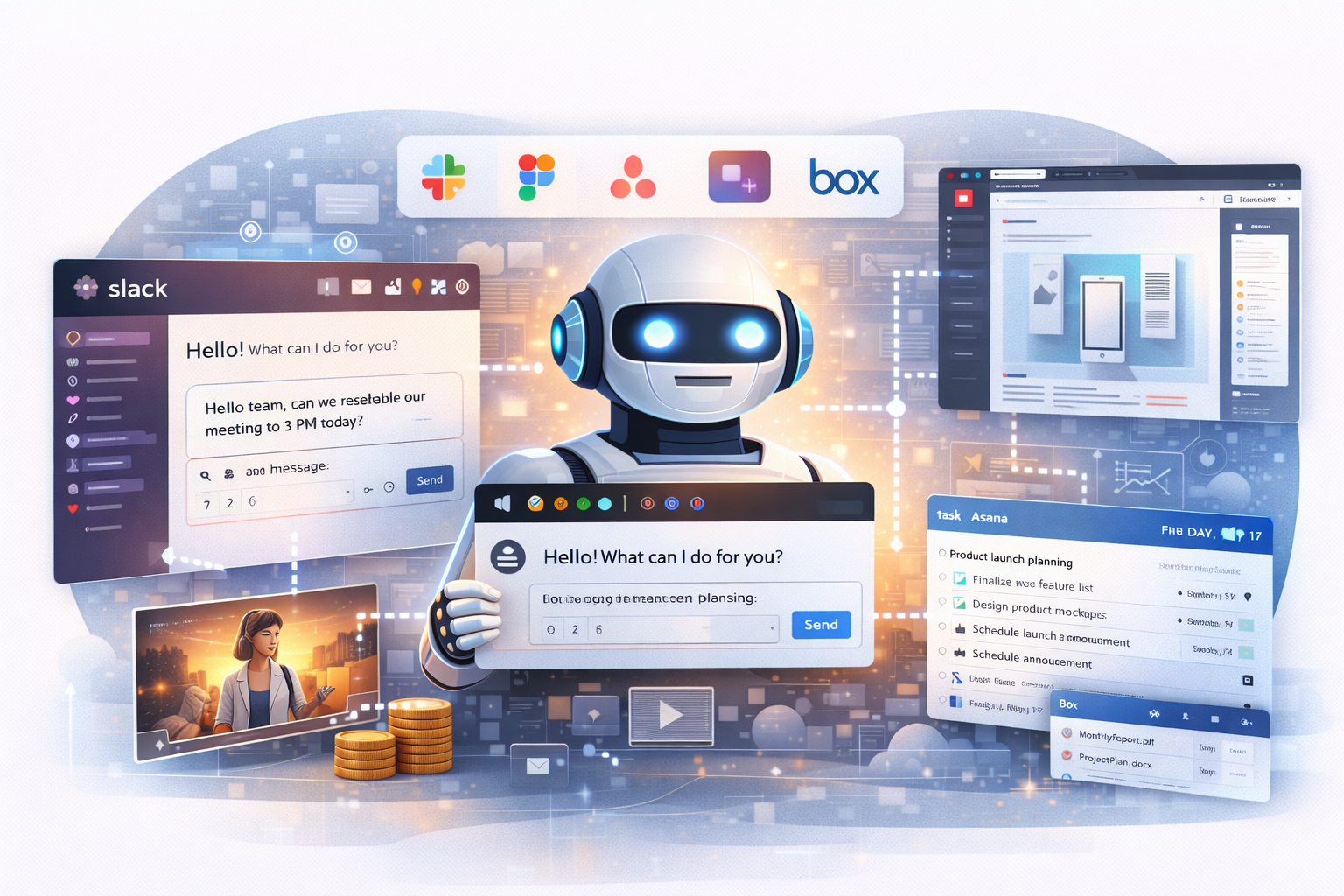
Here’s what separates workplace AI winners from workplace AI followers: while your competitors require switching between chatbot and work tools, Anthropic weaponized Claude interactive apps through logged-in access enabling tasks like sending Slack messages, editing Figma designs, managing Asana projects, or accessing Box files without leaving Claude interface through systematic Claude interactive apps.
The result? Announcement on January 26, 2026 targeting Pro, Max, Team, and Enterprise users while positioning Claude as central “command center” for enterprise work with upcoming Cowork integration, proving that Claude interactive apps don’t just connect tools, they transform AI into workflow hub through strategic Claude interactive apps.
The Claude Interactive Apps Revolution That’s Redefining Workplace AI
When AI company launches interactive apps enabling seamless workplace tool integration within chatbot interface, they’re not just adding integrations, they’re fundamentally reimagining how workers interact with enterprise software through strategic Claude interactive apps.
The scope of Claude interactive apps becomes evident through supporting Slack, Figma, Asana, Canva, Box, and Clay demonstrating broad workplace tool coverage through comprehensive Claude interactive apps.
Anthropic’s approach to Claude interactive apps emphasizes visual interfaces for faster iteration combining Claude’s reasoning with app-specific actions through integrated Claude interactive apps.
The transformation proves that Claude interactive apps aren’t API connections but bidirectional interactive embedding that enables complete workflow execution within AI interface through revolutionary Claude interactive apps.
How Bidirectional Integration Transforms Claude Interactive Apps
Most AI chatbot integrations involve reading data or triggering actions, while Anthropic transformed capability through Claude interactive apps providing logged-in access to tools inside Claude enabling full interaction through advanced Claude interactive apps.
The power of bidirectional approach in Claude interactive apps becomes evident through ability to send Slack messages, edit Figma designs, manage Asana projects within Claude rather than just querying information through interactive Claude interactive apps.
Their approach to Claude interactive apps includes visual interfaces that display tool functionality natively rather than just text-based command execution through embedded Claude interactive apps.
When your Claude interactive apps provide logged-in bidirectional access, you achieve workflow integration that simple API connections cannot deliver through comprehensive Claude interactive apps implementation.
The Command Center Positioning Of Claude Interactive Apps
Perhaps the most strategic aspect of Claude interactive apps is positioning Claude as central “command center” for enterprise work rather than auxiliary assistant through hub Claude interactive apps.
This command center framing in Claude interactive apps demonstrates Anthropic’s ambition for Claude to become primary interface where workers orchestrate activities across tools through centralized Claude interactive apps.
Anthropic’s Claude interactive apps prove that AI chatbot can evolve from question-answering tool to comprehensive workplace platform when proper integrations exist through transformative Claude interactive apps.
The organizations adopting command center Claude interactive apps will consolidate workflows while competitors juggle disconnected tools through unified Claude interactive apps.
The Cowork Integration Within Claude Interactive Apps
The automation enhancement for Claude interactive apps includes upcoming integration with Claude Cowork, an agentic tool for multi-stage tasks that will enable workflows like updating marketing graphics through autonomous Claude interactive apps.
This Cowork combination in Claude interactive apps demonstrates that interactive tool access plus agentic task execution creates powerful automation beyond either capability alone through synergistic Claude interactive apps.
Their Claude interactive apps roadmap includes enabling autonomous agents to manipulate workplace tools on user behalf rather than just humans directing actions through agentic Claude interactive apps.
When your Claude interactive apps integrate with agentic Cowork, you achieve automation that transforms AI from assistant to autonomous coworker through advanced Claude interactive apps.
The Model Context Protocol Foundation For Claude Interactive Apps
The technical infrastructure enabling Claude interactive apps is Model Context Protocol (MCP), an open standard co-developed with OpenAI for third-party app support through standardized Claude interactive apps.
This MCP foundation in Claude interactive apps demonstrates that Anthropic builds on open standards rather than proprietary integration approach encouraging ecosystem participation through open Claude interactive apps.
Their Claude interactive apps benefit from MCP enabling third-party developers to create integrations rather than requiring Anthropic to build every connection through ecosystem Claude interactive apps.
The open standard underlying Claude interactive apps suggests that integration marketplace could expand beyond initial tool set through extensible Claude interactive apps.
The Enterprise Tier Targeting Within Claude Interactive Apps
The commercial strategy for Claude interactive apps targets Pro, Max, Team, and Enterprise users while excluding free tier, demonstrating premium positioning through tiered Claude interactive apps.
This enterprise focus in Claude interactive apps shows that Anthropic views workplace integration as value-add justifying higher subscription tiers through monetized Claude interactive apps.
Their Claude interactive apps approach of limiting to paid plans enables recouping development costs while creating upsell incentive for free users through exclusive Claude interactive apps.
When your Claude interactive apps require premium subscription, you generate revenue while potentially limiting adoption scope through restricted Claude interactive apps.
The Safety Guidelines Around Claude Interactive apps
The security dimension of Claude interactive apps includes safety guidelines urging limiting permissions to avoid risks with sensitive data demonstrating responsibility focus through protected Claude interactive apps.
This safety emphasis in Claude interactive apps demonstrates that tool integration creates security risks when AI can access and manipulate workplace data through cautious Claude interactive apps.
Anthropic’s Claude interactive apps include recommendations about permission scoping showing that unlimited access creates vulnerability requiring careful governance through governed Claude interactive apps.
The safety guidance for Claude interactive apps recognizes that convenience must balance with security when AI systems access sensitive business information through balanced Claude interactive apps.
The Task Execution Variety In Claude Interactive Apps
The use case breadth of Claude interactive apps includes sending Slack messages, editing Figma designs, managing Asana projects, and accessing Box files demonstrating diverse workflow support through versatile Claude interactive apps.
This variety in Claude interactive apps shows that platform addresses multiple work functions from communication to design to project management through comprehensive Claude interactive apps.
Their Claude interactive apps approach enables workers to handle different task types without leaving AI interface reducing context switching through unified Claude interactive apps.
When your Claude interactive apps support communication, design, project management, and file access, you address major enterprise workflow categories through complete Claude interactive apps.
The Visual Interface Emphasis Within Claude Interactive Apps
The user experience priority for Claude interactive apps emphasizes visual interfaces for faster iteration rather than just text-based interaction through graphical Claude interactive apps.
This visual focus in Claude interactive apps demonstrates that effective workplace tool integration requires displaying native interfaces rather than text descriptions through visual Claude interactive apps.
Anthropic’s Claude interactive apps prove that chatbot can embed rich visual interfaces alongside conversational interaction when integrations support it through multimodal Claude interactive apps.
The visual interface capability of Claude interactive apps enables tasks like design editing that text-only interaction cannot support effectively through graphical Claude interactive apps.
The Directory Activation For Claude Interactive Apps
The access mechanism for Claude interactive apps involves users activating apps via claude.ai/directory rather than automatic availability demonstrating user control through opt-in Claude interactive apps.
This directory approach in Claude interactive apps enables users to choose which integrations they want rather than forcing all tools on everyone through customizable Claude interactive apps.
Their Claude interactive apps activation model provides central location for discovering and enabling integrations rather than scattered settings through organized Claude interactive apps.
When your Claude interactive apps use directory activation, you give users control over which tools integrate while providing discovery mechanism through managed Claude interactive apps.
The Prior Slack Integration Context For Claude Interactive Apps
The evolution context of Claude interactive apps includes prior Slack-Claude ties since 2025 and Claude Code previews but this launch shifts to bidirectional interactive embedding through advanced Claude interactive apps.
This evolution in Claude interactive apps demonstrates that Anthropic iteratively builds integration capabilities from basic connections to full interactive embedding through progressive Claude interactive apps.
Their Claude interactive apps represent culmination of integration strategy rather than first attempt at tool connectivity through mature Claude interactive apps.
The prior integration experience informing Claude interactive apps shows that Anthropic learned from earlier implementations before launching comprehensive interactive approach through informed Claude interactive apps.
The Strategic Implementation Lessons From Claude Interactive Apps
Anthropic’s Claude interactive apps launch provides crucial insights for enterprise AI platforms. First, pursue bidirectional interactive embedding rather than just read-only API connections for genuine workflow integration through interactive Claude interactive apps.
Second, build on open standards like Model Context Protocol that enable ecosystem participation beyond proprietary approach through open Claude interactive apps.
Third, emphasize visual interfaces alongside conversational interaction when integrating design and collaboration tools through multimodal Claude interactive apps.
Fourth, implement safety guidelines and permission controls that prevent security risks from AI workplace access through governed Claude interactive apps.
The Future Belongs To Claude Interactive Apps Leaders
Your enterprise AI platform’s integration transformation is approaching through Claude interactive apps technology that will define workplace productivity hub leadership. The question is whether your AI will become central command center or remain peripheral assistant.
Claude interactive apps aren’t just about tool connections, it’s about strategic workplace transformation that fundamentally changes how workers interact with enterprise software by consolidating activities within AI interface rather than switching between disconnected tools through capabilities that enable sending Slack messages, editing Figma designs, and managing projects without leaving chatbot.
The time for strategic Claude interactive apps development is now as Anthropic demonstrates that AI chatbot can become genuine workplace hub through bidirectional integration. The organizations that build interactive app ecosystems with visual interfaces and agentic automation will dominate enterprise AI while competitors offer simple API connections requiring constant app switching.
Anthropic proved through Claude interactive apps that comprehensive workplace integration works when bidirectional embedding, visual interfaces, and upcoming Cowork agentic capabilities combine to position AI as central command center for enterprise work. The only question remaining is whether your enterprise AI platform has vision to pursue deep tool integration before competitors establish insurmountable ecosystem advantages through interactive app directories and Model Context Protocol extensibility creating network effects in workplace AI hub adoption.