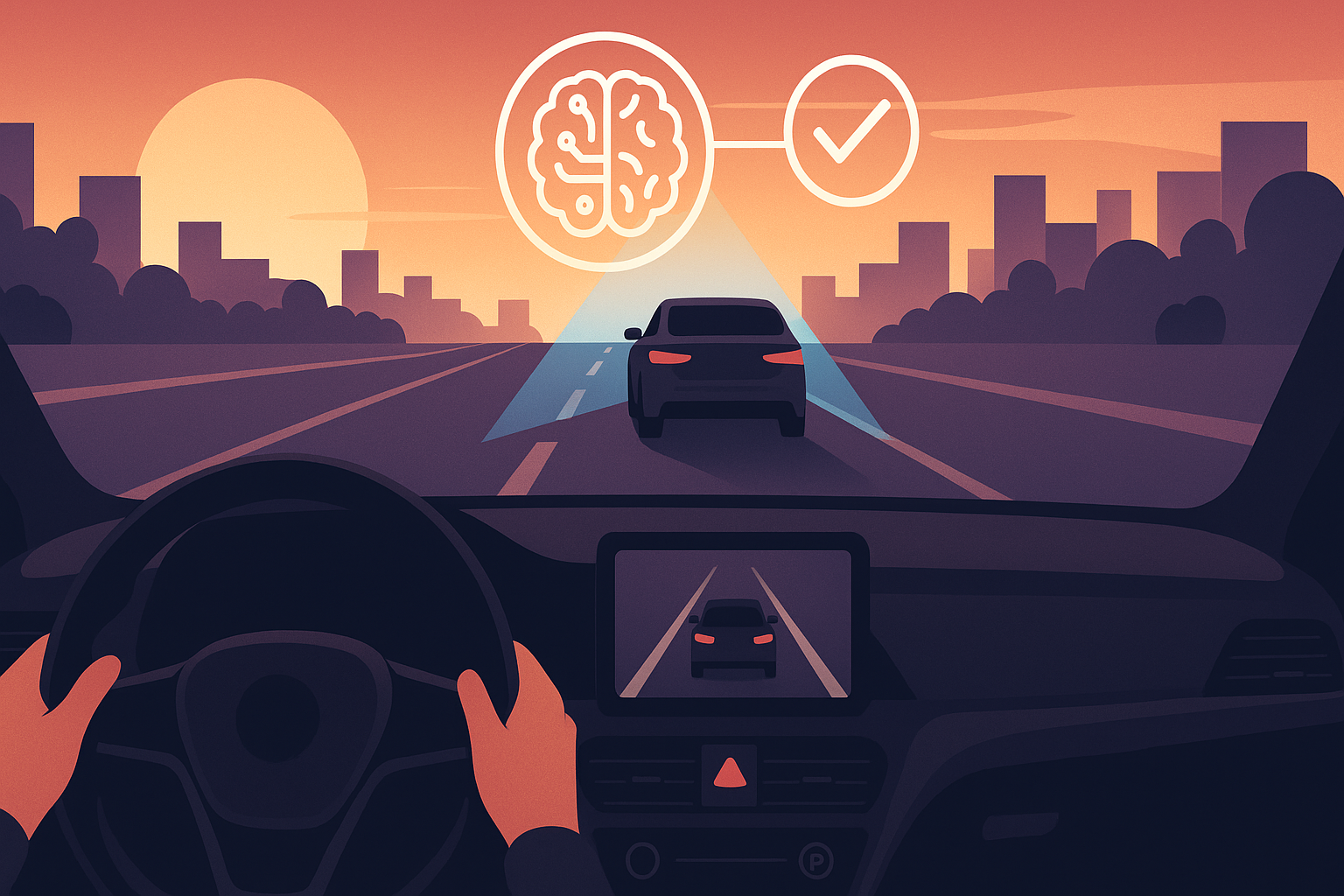
While most autonomous vehicle companies struggle with complex driving scenarios, Nvidia unveiled Alpamayo-R1, the world’s first open industry-scale reasoning vision language action (VLA) model for autonomous driving research at NeurIPS conference that integrates chain-of-thought reasoning with path planning to enhance AV safety through strategic autonomous driving AI. This isn’t just another AI model, it’s complete transformation of how autonomous vehicles approach decision-making through comprehensive autonomous driving AI.
Here’s what separates autonomous driving winners from autonomous driving losers: while your competitors use pattern-matching approaches, Nvidia weaponized autonomous driving AI through model that processes visual inputs alongside text to mimic human-like “common sense” decisions such as navigating pedestrian zones or lane closures by evaluating trajectories step-by-step through systematic autonomous driving AI.
The result? Model built on Nvidia’s Cosmos-Reason foundation model that supports customization via reinforcement learning while being openly available on GitHub and Hugging Face, proving that autonomous driving AI doesn’t just improve safety, it fundamentally enables level 4 autonomy where vehicles operate fully independently through strategic autonomous driving AI.
The Autonomous Driving AI Revolution That’s Redefining Vehicle Intelligence
When a technology leader like Nvidia unveils first open industry-scale reasoning VLA model for autonomous driving research, they’re not just releasing software, they’re fundamentally transforming how autonomous vehicles approach complex scenarios through strategic autonomous driving AI.
Nvidia’s approach to autonomous driving AI focuses on integrating chain-of-thought reasoning with path planning rather than end-to-end black-box models, demonstrating how autonomous driving AI can provide explainable decision-making through transparent autonomous driving AI.
Their success with autonomous driving AI demonstrates how processing visual inputs alongside text enables mimicking human-like common sense that pure vision models cannot achieve through multimodal autonomous driving AI.
The transformation proves that autonomous driving AI isn’t just about perception, it’s about reasoning that enables safe navigation of ambiguous scenarios through systematic autonomous driving AI implementation.
How Smart AV Companies Turn Reasoning Into Safety Through Autonomous Driving AI
Most autonomous vehicle systems rely on learned patterns without explicit reasoning, while Nvidia transformed decision-making into explainable process through autonomous driving AI that evaluates trajectories step-by-step like human drivers.
The power of Nvidia’s autonomous driving AI becomes evident through capability to handle complex scenarios like pedestrian zones or lane closures that require contextual understanding beyond visual pattern recognition through intelligent autonomous driving AI.
Their approach to autonomous driving AI includes building on Cosmos-Reason foundation model initially released January 2025, demonstrating systematic development through iterative autonomous driving AI.
When your autonomous driving AI can reason through scenarios while explaining decisions, you achieve safety assurance that black-box systems cannot provide through transparent autonomous driving AI implementation.
The Open-Source Strategy That Autonomous Driving AI Enables
Perhaps the most significant strategic decision in Nvidia’s autonomous driving AI is making Alpamayo-R1 openly available on GitHub and Hugging Face for non-commercial research, accelerating industry development through accessible autonomous driving AI.
This open-source approach to autonomous driving AI enables researchers worldwide to build on Nvidia’s foundation while contributing improvements back to community through collaborative autonomous driving AI.
Nvidia’s autonomous driving AI includes training and evaluation data subsets in Physical AI Open Datasets, providing complete resources for replication and extension through comprehensive autonomous driving AI.
The organizations that leverage open-source autonomous driving AI will accelerate development while contributors struggle with proprietary approaches that limit innovation through shared autonomous driving AI.
The Level 4 Autonomy That Autonomous Driving AI Targets
The ambitious goal of Nvidia’s autonomous driving AI is enabling level 4 autonomy where vehicles operate fully independently in defined areas without human intervention through capable autonomous driving AI.
This autonomy level through autonomous driving AI represents critical threshold for commercial autonomous vehicle deployment that requires reasoning capabilities beyond current systems through advanced autonomous driving AI.
Their autonomous driving AI demonstrates how chain-of-thought reasoning becomes essential for level 4 autonomy where vehicles must handle edge cases independently through robust autonomous driving AI.
When your autonomous driving AI targets level 4 autonomy, you address the safety and reliability requirements that enable true self-driving through capable autonomous driving AI.
The Developer Resources That Autonomous Driving AI Provides
Nvidia’s autonomous driving AI includes Cosmos Cookbook offering step-by-step guides for data curation, synthetic data generation, inference, and model evaluation, enabling practical implementation through educational autonomous driving AI.
This resource provision through autonomous driving AI demonstrates how model release requires comprehensive tooling for effective adoption rather than just code through supported autonomous driving AI.
Their autonomous driving AI approach includes open-source AlpaSim framework for evaluating AR1 and examples like LidarGen for AV simulation that enable complete development workflows through integrated autonomous driving AI.
The developer support for autonomous driving AI multiplies model value by enabling researchers to customize and extend capabilities through tooled autonomous driving AI.
The Customization Capability That Autonomous Driving AI Offers
Nvidia’s autonomous driving AI supports customization via reinforcement learning that enables adaptation to specific vehicle platforms and operating environments through flexible autonomous driving AI.
This customization through autonomous driving AI recognizes that different autonomous vehicle applications require tailored behaviors beyond one-size-fits-all approach through adaptable autonomous driving AI.
Their autonomous driving AI demonstrates how foundation models provide starting point that organizations can refine for specific use cases through customizable autonomous driving AI.
When your autonomous driving AI enables reinforcement learning customization, you achieve application-specific optimization through tailored autonomous driving AI.
The Physical AI Strategy That Autonomous Driving AI Supports
The broader context of Nvidia’s autonomous driving AI is CEO Jensen Huang’s emphasis on physical AI’s role in robotics and AVs, positioning Nvidia as key enabler for real-world AI perception and interaction through strategic autonomous driving AI.
This physical AI framing of autonomous driving AI shows how autonomous vehicles represent one application of broader technology category that includes robotics and smart cities through comprehensive autonomous driving AI.
Nvidia’s autonomous driving AI announcement alongside speech and safety models like MultiTalker Parakeet and Nemotron Content Safety Reasoning demonstrates systematic physical AI development through integrated autonomous driving AI.
The physical AI positioning of autonomous driving AI elevates autonomous vehicles from isolated application to key component of broader AI infrastructure through strategic autonomous driving AI.
The Safety Enhancement That Autonomous Driving AI Delivers
The primary value proposition of Nvidia’s autonomous driving AI is enhancing AV safety in complex scenarios through reasoning that anticipates and avoids dangerous situations through protective autonomous driving AI.
This safety focus through autonomous driving AI addresses the fundamental autonomous vehicle challenge where edge cases create risks that pattern-matching systems cannot handle through reliable autonomous driving AI.
Their autonomous driving AI demonstrates how chain-of-thought reasoning enables safety verification by making decision processes transparent and auditable through explainable autonomous driving AI.
When your autonomous driving AI prioritizes safety through reasoning capabilities, you achieve reliability necessary for public deployment through protective autonomous driving AI.
The Research Acceleration That Autonomous Driving AI Creates
Nvidia’s autonomous driving AI enables research community to advance autonomous vehicle technology faster by providing foundation that would take years to develop independently through accelerating autonomous driving AI.
This research enablement through autonomous driving AI demonstrates how technology leaders can advance entire fields by sharing foundational models that all researchers can build upon through collaborative autonomous driving AI.
Their autonomous driving AI approach of releasing complete tooling and datasets alongside models ensures that researchers can immediately begin productive work through equipped autonomous driving AI.
The research acceleration from autonomous driving AI compounds as community contributions improve base models that all researchers benefit from through collaborative autonomous driving AI.
The Competitive Positioning That Autonomous Driving AI Establishes
Nvidia’s autonomous driving AI establishes them as essential infrastructure provider for autonomous vehicle development by offering capabilities that individual companies struggle to develop through foundational autonomous driving AI.
The comprehensive nature of their autonomous driving AI including models, tooling, datasets, and simulation frameworks creates ecosystem that competitors struggle to match through systematic autonomous driving AI.
Their autonomous driving AI success positions Nvidia as platform that autonomous vehicle companies build upon rather than compete against through enabling autonomous driving AI.
The market leadership established through autonomous driving AI influences how entire autonomous vehicle industry approaches development by setting technical standards through pioneering autonomous driving AI.
The Application Versatility That Autonomous Driving AI Provides
The strategic breadth of Nvidia’s autonomous driving AI is applicability beyond autonomous vehicles to robotics, smart cities, and other physical AI applications through versatile autonomous driving AI.
This versatility through autonomous driving AI demonstrates how reasoning and vision-language capabilities transfer across physical AI domains rather than being vehicle-specific through generalizable autonomous driving AI.
Their autonomous driving AI proves that investment in foundational capabilities creates value across multiple applications rather than single use case through multipurpose autonomous driving AI.
When your autonomous driving AI enables diverse physical AI applications, you achieve platform value that exceeds individual application markets through versatile autonomous driving AI.
The Strategic Implementation Lessons That Define Autonomous Driving AI Success
Nvidia’s autonomous driving AI transformation provides crucial insights for autonomous vehicle companies. First, implement reasoning capabilities alongside pattern recognition to handle complex scenarios through intelligent autonomous driving AI.
Second, provide open-source access to foundational models that accelerates industry development while establishing platform leadership through accessible autonomous driving AI.
Third, include comprehensive tooling, datasets, and simulation frameworks alongside models to enable practical adoption through supported autonomous driving AI.
Fourth, position autonomous vehicle AI as component of broader physical AI strategy that creates cross-domain value through strategic autonomous driving AI.
The Future Belongs To Autonomous Driving AI Leaders
Your autonomous vehicle company’s technology transformation is approaching through autonomous driving AI that will define safety and capability for vehicles willing to embrace reasoning models. The question is whether your organization will leverage open-source autonomous driving AI or struggle with proprietary approaches.
Autonomous driving AI isn’t about technology alone, it’s about strategic capability development that fundamentally changes how autonomous vehicles understand scenarios, make decisions, and ensure safety through reasoning that enables level 4 autonomy.
The time for strategic autonomous driving AI adoption is now. The organizations that act decisively will establish safety and capability advantages that become increasingly difficult for competitors to match as autonomous driving AI matures and deployment standards evolve.
Nvidia proved through Alpamayo-R1 that comprehensive autonomous driving AI works at industry scale while being openly available for research advancement. The only question remaining is whether your autonomous vehicle team has the vision to implement systematic autonomous driving AI before competitors make it their advantage in safety performance and autonomous capability.